


In This Article
Let me be honest with you – when I first heard about prenuptial agreements, I thought they were just for celebrities and billionaires who wanted to protect their mansions and private jets. Girls, Boys… was I wrong.
The truth is, prenups have become incredibly common among regular couples like you and me. And after years of working in family law, I can tell you that understanding what is a prenuptial agreement (and what it isn't) might be one of the smartest things you do before walking down the aisle.
So grab a coffee, and let's talk about this like we're sitting in my living room. Because honestly? This stuff isn't as complicated or scary as everyone makes it out to be.
Definition: What Exactly Is a Prenuptial Agreement?
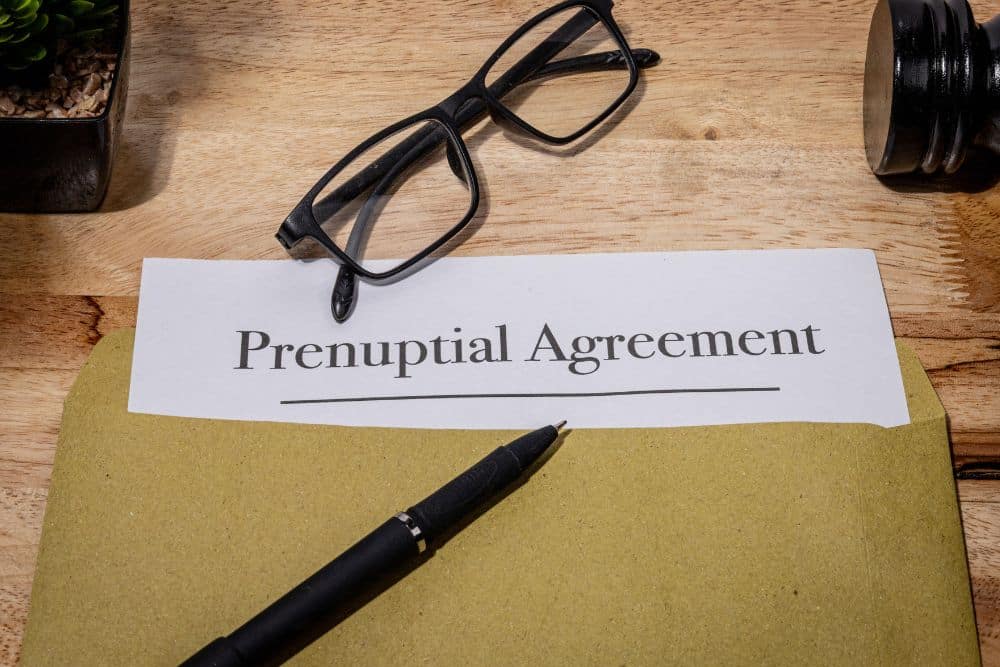
Think of a prenuptial agreement as a roadmap for your financial life together. It's basically a legal marriage contract that you and your partner sign before getting married that spells out who owns what and what happens to your stuff if – and I stress the “if” here – things don't work out.
But here's what should be included in a prenup: it's not just about divorce. A good prenuptial agreement also covers what happens if one of you passes away, how you'll handle debts, and even day-to-day financial decisions during your marriage.
The legal definition is pretty straightforward: it's a written premarital agreement between two people who plan to marry that outlines the ownership and division of assets and debts. But the real-world definition? It's peace of mind wrapped up in legal language.
Legal Requirements for a Valid Prenup
Now, you can't just scribble something on a napkin and call it a prenup document (though I've seen couples try). For it to hold up in court, your agreement needs to check several boxes based on prenup requirements by state.
First, it has to be in writing. I know, I know – seems obvious, but you'd be surprised how many handshake agreements I've seen fall apart.
Second, both of you need to sign it voluntarily. This means no one's holding a gun to your head (literally or figuratively). If you sign it the night before your wedding with 200 guests flying in, a judge might raise an eyebrow about whether it was truly voluntary. This is when to sign a prenuptial agreement becomes crucial.
Third, you both need to fully disclose your assets and debts. Complete honesty is the name of the game here. Hiding that secret savings account or those student loans? Big mistake that could invalidate the whole thing.
And finally, the terms can't be completely unfair to one person. Courts won't enforce agreements that leave one spouse destitute while the other lives in luxury.
📊 Prenup vs. Postnup: Quick Comparison
| Feature | Prenuptial Agreement | Postnuptial Agreement |
|---|---|---|
| Timing | Before marriage | After marriage |
| Legal Standing | Stronger enforcement | More scrutiny by courts |
| Cost | $2,500 – $15,000 | $3,000 – $20,000 |
| Timeline | 1-6 months typical | 2-8 months typical |
| Pressure Concerns | Must sign 30+ days before wedding | Courts check for coercion |
| Common Reason | Asset protection planning | Marriage crisis or changed finances |
| Both Parties Need Lawyers? | Strongly recommended | Legally required in most states |
Prenup vs. Postnuptial Agreement
Quick sidebar – what's the prenup vs postnup difference? Timing, mainly. A prenuptial agreement is signed before marriage, while a postnuptial agreement is signed after you're already married.
Think of it like this: a prenup is like planning your route before a road trip, while a postnup is like stopping to recalibrate your GPS after you've been driving for a while. Both can get you where you need to go, but do prenups hold up in court better because judges don't have to worry about one spouse having undue influence over the other during marriage.
Why Get a Prenuptial Agreement? Key Benefits

Let me share something that might surprise you: 50% of Americans now support the use of prenuptial agreements according to the latest Harris Poll. That's a huge shift from even a decade ago, and it's happening for good reasons.
Asset Protection and Financial Security
The most obvious prenup benefit is protecting what you bring into the marriage. Maybe you inherited your grandmother's house, built up a decent savings account, or have investments that you want to keep separate. A prenuptial agreement lets you do that without any ambiguity.
But here's what's really cool – it protects both of you. If your partner has assets they want to protect too, the prenup works for them as well. It's not about one person protecting themselves from the other; it's about both of you protecting yourselves together.
Debt Protection and Liability Management
This one's huge, especially with student loans being what they are today. If your partner comes into the marriage with $50,000 in student debt, a prenuptial agreement can protect you from becoming responsible for that debt if things go south.
I had one couple where the husband was starting a risky business venture. His wife was totally supportive, but they used a prenup to make sure that if the business failed and creditors came calling, her assets would be protected. Smart thinking.
Business and Inheritance Protection
If you own a business or expect to inherit one, a prenup for business owners can be a lifesaver. Without one, your spouse could potentially claim ownership of part of your business in a divorce, which could force you to sell or dramatically change how you operate.
Same goes for family heirlooms or inheritances. That antique ring collection your aunt left you? A prenuptial agreement can ensure it stays in your family line.
Who Should Consider a Prenuptial Agreement?
Here's where I want to bust a myth: prenups aren't just for the wealthy anymore. The data shows that 84% of women using modern prenup platforms have less than $500,000 in liquid assets. We're talking about regular people with regular jobs and regular concerns.
High-Net-Worth Individuals
Obviously, if you've got significant assets, a prenuptial agreement makes sense. But “significant” is relative. If you own a home, have a decent retirement account, or own valuable personal property, you might benefit from a prenup more than you think.
Business Owners and Entrepreneurs
If you own a business – even a small one – a prenup for business owners is almost essential. Business partnerships can get messy enough without adding divorce proceedings to the mix. Your business partners will thank you for having this protection in place.
Second Marriages and Blended Families
This is where second marriage prenup benefits really shine. If you have kids from a previous relationship, a prenuptial agreement can ensure that your assets will go to them rather than potentially being tied up in complex inheritance disputes. It's not about being selfish – it's about being responsible.
How Much Does a Prenuptial Agreement Cost?

Let's talk money, because I know that's what you're thinking about when you wonder how much does a prenup cost. The traditional route – hiring separate attorneys for each of you – typically costs around $8,000 total according to recent surveys. That's about $4,000 per person, and it can take anywhere from one to three months to complete.
Average Costs by Complexity
💰 Prenup Cost Breakdown by Complexity
| Complexity Level | Attorney Route | Online Platform | Timeline |
|---|---|---|---|
|
Simple • Single property • Basic assets • No business |
$2.5K – $5K per person Total: $5K – $10K |
$599 total (both parties) |
Traditional: 1-3 mo Online: Same day – 2 wks |
|
Moderate • Multiple properties • Retirement accounts • Student debt |
$4K – $8K per person Total: $8K – $16K |
$599 total + attorney review ($500-$1,500) |
Traditional: 2-4 mo Online: 1-3 wks |
|
Complex • Business ownership • Trusts & investments • Family inheritances |
$7.5K – $15K+ per person Total: $15K – $30K+ |
Not recommended without attorney (platform + review) |
Traditional: 3-6 mo Hybrid: 1-2 mo |
| 💡 Avg savings with online: $7,400+ (93% reduction) | |||
Factors That Affect Pricing
The complexity of your financial situation is the biggest factor in prenup cost breakdown. Multiple properties, business ownership, complex investment portfolios, and family trusts all add to the cost and time required.
But here's the thing – there are now modern alternatives that can dramatically reduce these costs. Platforms like HelloPrenup offer the same legal protection for around $599, and you can complete the process online in a matter of days rather than months. That's a massive difference when you're looking at prenup template vs lawyer options.
What Can and Cannot Be Included in a Prenup?
This is where things get interesting when you're figuring out what should be included in a prenup. You have a lot of flexibility in what you can include, but there are some hard limits.
Valid Prenup Provisions
You can definitely include how you'll divide property, who pays which debts, spousal support terms, and what happens to retirement accounts. You can also include some lifestyle clauses, like how you'll handle joint bank accounts or major financial decisions.
Prohibited Clauses and Limitations
But you absolutely cannot include anything about child support or custody. Courts will always prioritize the best interests of children, regardless of what you agreed to before they were born.
You also can't include clauses that encourage divorce or anything illegal. And forget about those tabloid stories of prenups with weight requirements or intimacy schedules – courts generally won't enforce those kinds of personal lifestyle mandates.
How to Create a Prenuptial Agreement
The prenup timeline before wedding is crucial here. You want to start this process at least six months before your wedding, and definitely no later than 30 days before. Courts are suspicious of prenups signed too close to the wedding date because it suggests one person might have been pressured.
Timeline and Process
Start by having an honest conversation with your partner about your assets, debts, and expectations. Then decide whether you want to go the traditional attorney route or use a modern platform.
If you choose attorneys, each of you will need your own representation. If you use a platform like HelloPrenup, you can work through the process together online, with legal review included. 62% of attorneys report increased demand for prenuptial agreements over the past three years according to the American Academy of Matrimonial Lawyers.
Working with Attorneys
If you go the traditional route, make sure your prenup lawyer specializes in family law and has experience with prenups. Ask about their typical timeline and cost structure upfront. And remember – even if you wonder about prenup without attorney options, you can always have a lawyer review the final document before signing.
Common Myths and Misconceptions About Prenups
Let me clear up some prenup myths debunked. First, the idea that prenups are only for people who don't trust each other is completely wrong. Think of it like car insurance – you don't buy it because you plan to get in an accident; you buy it because you're responsible.
Second, prenups don't doom marriages to failure. There's no evidence that having a prenuptial agreement increases divorce rates. If anything, going through the process of honest financial disclosure and planning can strengthen your relationship.
Third, prenups aren't just for protecting the wealthy spouse from the poor one. They protect both parties and can actually ensure fairness for everyone involved.
Prenuptial Agreement Statistics and Trends
The prenup statistics 2025 tell a fascinating story. Back in 2010, only 3% of couples had prenups. By 2024, that number jumped to 15%. That's a 400% increase in just over a decade, with 2,065,905 marriages registered in the US in 2022 according to CDC data.
📈 Prenup Adoption Growth (2010-2024)
- 📊 50% of Americans now support prenuptial agreements (Harris Poll 2024)
- 👥 62% of attorneys report increased prenup demand (last 3 years)
- 💑 2,065,905 marriages in the US (2022)
- 💰 $8,000 average traditional prenup cost
- ⚡ $599 HelloPrenup online alternative
Rising Popularity Among Millennials and Gen Z
Here's what's really interesting: 41% of Gen Z couples who are engaged or married have signed a prenuptial agreement. This generation is approaching marriage differently – they're more financially aware, more equality-focused, and more practical about protecting their assets.
And get this – 52% of the time, it's the woman who initiates the prenup conversation according to HelloPrenup data. So much for the stereotype that these agreements are just men trying to protect their money from gold-digging women.
🎯 Who's Getting Prenups in 2024?
| Generation | Adoption Rate | Key Motivations |
|---|---|---|
|
Gen Z (18-27) |
41% 🔥 |
• Student debt protection • Early career assets • Financial independence |
|
Millennials (28-43) |
28% |
• Business ownership • First home purchase • Inheritance planning |
|
Gen X (44-59) |
18% |
• Second marriages • Blended families • Retirement assets |
|
Boomers (60+) |
8% |
• Estate protection • Adult children concerns • Medical expenses |
|
HelloPrenup User Data: 👩 52% initiated by women | 💼 84% have <$500K | 👫 75% aged 18-39 | 🏦 79% share joint accounts |
||
State-by-State Variations
Different states have different approaches to marital property, which affects prenup requirements by state. Community property states like California and Texas treat all marital assets as jointly owned, while common law states let you keep separate property separate.
But regardless of which state you're in, a well-written prenuptial agreement can provide clarity and protection that state law might not.
Frequently Asked Questions About Prenuptial Agreements
How long before marriage should we sign a prenup?
At least 30 days before your wedding to avoid any claims of coercion, but I recommend starting the process six months out. This gives you time for negotiations, revisions, and second thoughts without feeling rushed during your prenup timeline before wedding.
Can a prenup be modified after the marriage?
Yes, but both of you have to agree to the changes. You'd create what's called a postnuptial agreement. The process is similar, but it can be a bit more complex legally.
Are prenups valid in all states?
Yes, but each state has its own specific prenup requirements by state. Most states have adopted some version of the Uniform Premarital Agreement Act, which provides consistent standards.
Can we create a prenup without attorneys?
Technically yes, but I strongly recommend that each of you at least consult with a prenup lawyer, even if you use an online platform to create the initial document. The cost of getting it wrong far exceeds the cost of getting it right.
Can a prenup cover child custody or support?
Absolutely not. Courts will always make decisions about children based on their best interests at the time, regardless of what you agreed to beforehand.
Look, I get it. Talking about prenuptial agreements isn't the most romantic part of wedding planning. But having these conversations now, while you're head-over-heels in love and committed to working together, is so much better than trying to figure things out if your relationship hits rough waters later.
The couples I've seen who handle this stuff upfront? They're not planning for failure – they're planning for success. They're removing financial uncertainty from their relationship so they can focus on why couples get prenups: building a life together.
Whether you decide a prenuptial agreement is right for you or not, just having the conversation about money, assets, and expectations is valuable. And if you do decide to move forward, remember that modern tools like HelloPrenup have made the process faster, cheaper, and way less intimidating than it used to be.
The most important thing? Whatever you decide, make sure you're both comfortable with it. This should be a decision you make together, not something one person pressures the other into. After all, the best prenup is one that both of you feel good about – and then hopefully never need to use.
Ready to explore your options? Modern platforms like HelloPrenup offer the same legal protection as traditional attorneys for just $599 (compared to the $8,000 average), with 24/7 online access and same-day document availability. Over 75% of their users are between 18-39 years old, proving that smart financial planning isn't just for the wealthy anymore.

